
01
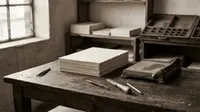 PLATE 01 / BEFORE 1970
Before the image
Liquid, tablets, sugar cubes, gelatin, and the practical emergence of absorbent paper as a carrier.
View chapter→A COMPENDIUM OF BLOTTER ART
A chronological and thematic history of blotter art—treated as visual culture, material evidence, and a living print medium.
CHRONOLOGY
PLATE 01 / BEFORE 1970Liquid, tablets, sugar cubes, gelatin, and the practical emergence of absorbent paper as a carrier.
View chapter→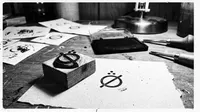 PLATE 02 / 1970–1976
Early printed signs, words, symbols, and characters begin identifying batches and building an underground visual vocabulary.
View chapter→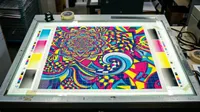 PLATE 03 / 1977–1989
Perforated grids standardize; offset color, repeated icons, comics, mysticism, and countercultural emblems proliferate.
View chapter→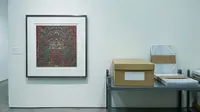 PLATE 04 / 1990–2009
Undipped editions, signed sheets, legal scrutiny, archives, exhibitions, and specialist print culture make the medium newly visible.
View chapter→ PLATE 05 / 2010–NOW
Contemporary artists, publishers, museums, books, and digital tools reconsider blotter as an independent print format.
View chapter→CROSS-INDEX
No single chronology can hold the whole story. These indexes connect people, images, objects, places, methods, and evidence.

Artists, printers, chemists, collectors, publishers, photographers, and chroniclers.
Cartoons, mystical systems, popular culture, portraiture, geometry, words, and visual signatures.
Sheets, tabs, perforators, print plates, frames, books, evidence binders, and archival storage.

San Francisco, London, festivals, mail networks, galleries, courtrooms, and private archives.
Printing, perforation, dosing history, editioning, signing, UV treatment, preservation, and display.

Oral histories, court records, journalism, catalogues, books, collections, and object records.
METHOD
Each entry is designed to separate documented fact from recollection, attribution, inference, and folklore. Object records note whether a sheet is dosed, formerly dosed, undipped, or of unknown status when the source makes that distinction.
FOUNDATION SHELF
Erik Davis · MIT Press
Thomas Lyttle · MAPS Bulletin
Mark McCloud · San Francisco
Jason S. Sexton · Boom California
Library and Archives · Rock & Roll Hall of Fame
Supreme Court of the United States
The published site should link directly to primary and authoritative sources wherever available and license or clear every reproduced image.